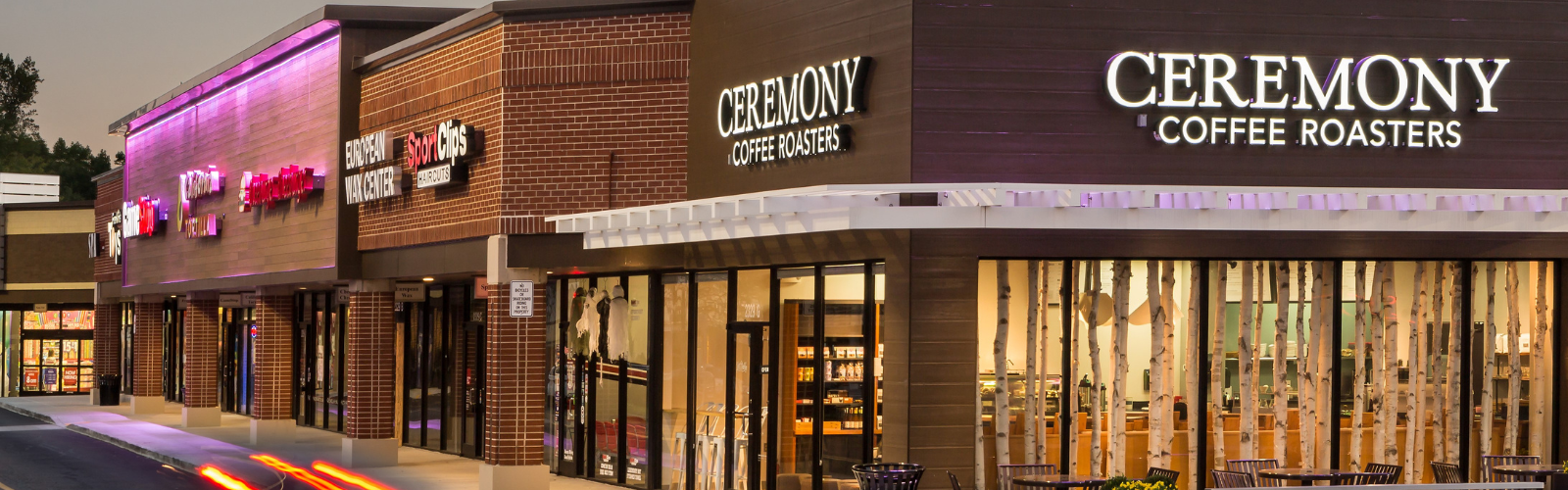
Retail’s Evolution Exceeds Convenience Alone

For years, the formula for a successful shopping center was fairly straightforward: make it convenient and people would come. Convenience still matters, but it’s no longer what sets one property apart from another. Today, it’s simply the expectation.

What increasingly separates successful neighborhood centers is how well they fit into people’s daily lives. At a time when retail space remains scarce, retailers are competing aggressively for high-quality locations that generate consistent traffic and support multiple customer touchpoints. According to the National Associate of Realtors, retail continues to maintain the lowest vacancy rate among major commercial real estate sectors, underscoring the demand for well-located, well-merchandised centers.
Across the DMV, we’re seeing shopping centers become places where people stop for more than one reason. A grocery run turns into lunch. A fitness class leads to a coffee stop or a visit to the dry cleaner. The more naturally those visits connect, the more valuable the center becomes to both customers and tenants.
Hybrid work has further accelerated this evolution. According to Gallup, hybrid work was the most common work arrangement among remote-capable employees in 2026, with 52% working in a hybrid model.  As traditional commuting patterns continue to shift, consumers are spending more time closer to home and making fewer destination-specific trips. Retail research increasingly shows that suburban and neighborhood retail centers are benefiting from these changing patterns as consumers seek convenient locations where they can accomplish multiple tasks in a single visit.

From Quick Stops to Everyday Habits

Think about the difference between stopping at a grocery store and spending an hour or two at a well-designed neighborhood center.

Someone might begin the morning at Orangetheory Fitness, grab coffee afterward, stop by the grocery store, pick up a prescription, and meet a colleague for lunch. Later that evening, they may come back for dinner with family or friends. All of the businesses reinforce one another.

That’s what good placemaking looks like. Instead of generating one-off visits, the center becomes part of a customer’s routine.

This matters because longer visits typically create more opportunities for cross-shopping and incremental spending. Retailers increasingly recognize that consumers value destinations where errands, dining, wellness, and social interaction can happen in one trip rather than across multiple locations. As a result, centers that encourage longer dwell times often create stronger performance across their tenant base.

A Strong Tenant Mix Doesn’t Happen by Accident

Creating a neighborhood destination is about more than leasing every available space. The strongest centers are built around businesses that naturally complement one another and encourage repeat visits throughout the week.

Anchor Grocers & Everyday Retail

Grocery anchors remain among the most valuable traffic drivers in retail real estate. Grocery spending is one of the most resilient consumer behaviors, regardless of economic conditions. Demand for grocery-anchored retail space remains strong, supported by limited new supply and continued retailer expansion.
The weekly grocery trip creates built-in opportunities for neighboring retailers, restaurants, and service providers to capture additional visits and spending.

Local Retailers & Service Providers

Regional boutiques, salons, medical offices, and specialty retailers provide something consumers increasingly value: relevance to the local community. These businesses help differentiate a center while delivering services that cannot be easily replaced by e-commerce.

Restaurants & Gathering Places

Dining has become an increasingly important component of successful neighborhood centers. Whether it’s a quick lunch, happy hour, or family dinner, restaurants create additional visit occasions and help extend the length of stay.

Wellness & Personal Care

Fitness concepts, healthcare providers, and personal care businesses continue to expand because they generate recurring visits tied to routines rather than occasional purchases. These experiential and service-oriented uses have become increasingly important as retailers seek categories that are less vulnerable to online competition.

The goal is to create a mix where each business benefits from the traffic generated by the others.

Placemaking in Action Across the DMV

Several shopping centers throughout the region illustrate this approach.

Festival at Riva (Annapolis, MD) reflects the growing demand for centers that serve multiple customer needs in a single trip. With a grocery anchor, national retailers such as J.Crew Factory, diverse dining options, and everyday services, the center exemplifies how complementary uses can encourage cross-shopping and repeat visitation throughout the week.
Springfield Plaza (Springfield, VA) demonstrates the enduring strength of grocery-anchored retail. The combination of Trader Joe’s, Whole Foods Market, fitness concepts, dining, and neighborhood services creates a daily traffic ecosystem that supports tenants throughout the day and across multiple visit occasions.

Festival at Bel Air (Bel Air, MD) highlights another important trend: the growing role of community-oriented retail destinations. Beyond its mix of retailers, restaurants, and service providers, the property hosts community events that give consumers reasons to visit even when they are not actively shopping. In an increasingly competitive retail environment, those experiences help strengthen long-term customer loyalty.

Together, these centers illustrate a broader shift occurring throughout the retail industry. The most successful properties are no longer defined by a single anchor tenant or transaction. They succeed because they become integral parts of consumers’ routines.

The Future of Neighborhood Retail

Location will always matter. But today, what people experience after they arrive matters just as much.

The shopping centers that continue to perform well aren’t necessarily the biggest or the newest. They’re the ones that become part of everyday life, places people return to because they can accomplish what they need while also enjoying the experience.

At Rappaport, that’s the kind of retail environment we strive to create. By understanding local communities, building the right tenant mix, and taking a long-term view of placemaking, we help create neighborhood centers that continue to deliver value for retailers, property owners, investors, and the communities they serve. Contact us to learn more.


Author Charlie Foley

More posts by Charlie Foley