Retail real estate across the Mid-Atlantic is having a moment — but it’s a disciplined one. As fundamentals remain healthy in Virginia, Maryland and Washington, D.C., the region is seeing a notably more selective approach to retail growth.
To counter the tight supply environment and mounting land and construction costs, adaptive reuse developments have emerged as the most efficient response throughout the Mid-Atlantic.
Henry Fonvielle, president of McLean, Virginia-based Rappaport, adds that, “second-generation space has effectively become the new development pipeline.”
Fonvielle notes numerous illustrations of creative conversions and re-uses such as bank branches being transformed into restaurants and large-format spaces being repositioned into food-focused specialty anchors.
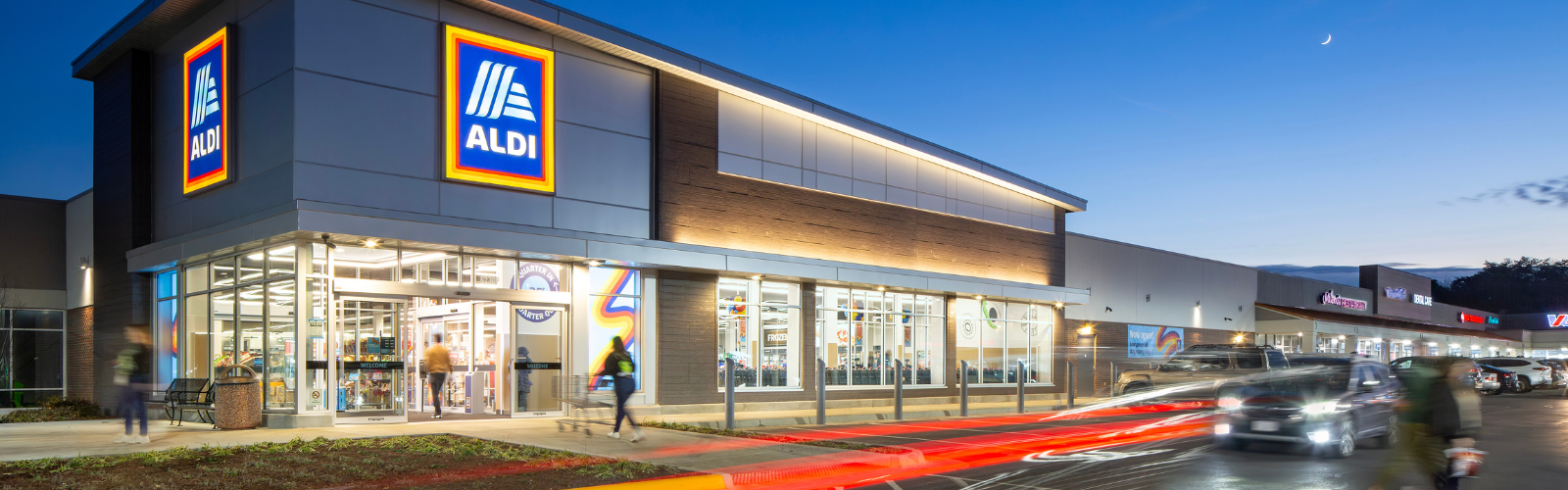
For instance, Rappaport signed a lease with Marufuji Japanese Market in a former Ethan Allen furniture store in Tysons, Virginia, which has since expanded into the adjoining space (a former Tile Shop) to include a Japanese bookstore, food hall and extended selection of non-food products. Meanwhile, in-line spaces are being adapted to create grocery anchors, such as the Aldi store at West Springfield Shopping Center in Springfield, Virginia.